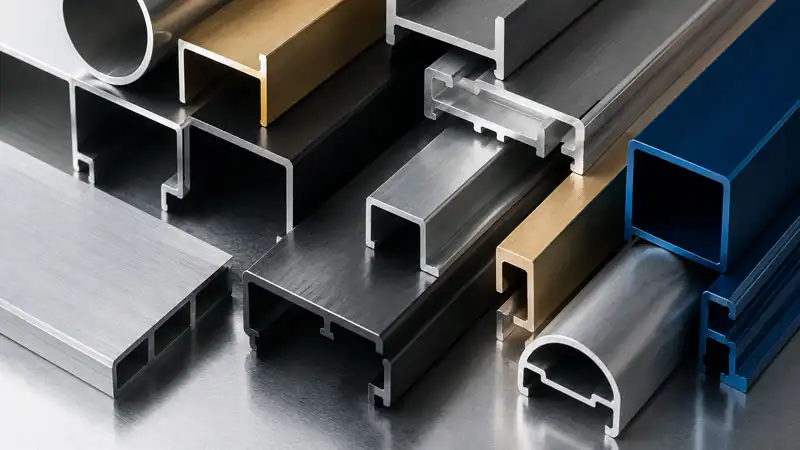

Anodizing Reference Guide
Unlock the secrets of anodizing with our comprehensive Anodizing Reference Guide. Discover important technical details about various types of anodic coatings and their application methods. From sulfuric acid-based coatings to decorative and architectural finishes, our guide covers it all. Whether you're a beginner or an experienced professional, this guide is a valuable resource for understanding the mechanical and chemical finishing processes involved in anodizing. Explore the possibilities and enhance your knowledge with the Aluminum Anodizers Council [AAC]. What is Anodizing? Find out today with our Anodizing Reference Guide.
Mil Spec 8625 F
This specification is the model for much of the anodizing specified for military and aerospace products. It covers the requirements for six types and two classes of anodizing for nonarchitectural applications. MIL-A-8625 also forms the basis for many anodizing specifications that are proprietary to individual companies. Nearly all of these proprietary specifications refer to one or more requirements of this mil spec.The specification includes broad processing conditions for anodizing.
It also gives important performance and acceptance criteria for such attributes as coating weight, corrosion resistance, light fastness, paint adhesion, abrasion resistance, and dying. Additionally, standards are set for general appearance, workmanship, contact marks, inspection, process control, and testing.
Type IA
Conventional coatings produced from chromic acid bath
Thickness:
0.5µ-7.6µ (microns)
Type IB
Low voltage chromic acid anodizing (20 volts) Used for 7xxx series alloys
Thickness:
0.5µ-7.6µ
Type II
Conventional coatings produced from sulfuric acid bath
Thickness:
1.8µ-25.4µ
Type III
Hard coat (Uniform anodic coatings)
Thickness:
12.7µ-115µ
Class i
Class ii
TYPE I "Chromic Acid"
Color will vary from clear to dark gray depending on alloy. Copper bearing alloys only yield gray colors. Not as readily dyed as sulfuric anodize due to thinness of coating.New salt spray requirement is 336 hours (5% solution per method 811 or FED-STD-No. 151).
Type I
Chromic acid anodized coating. This process is used principally for the treatment of aircraft parts. An example is the Bengough-Stewart process where a 30 – 50 g/l chromic acid bath is maintained at 100° F and the voltage is gradually raised to 50V. Adjustments are made for high copper, zinc, and silicon alloys.
Coating weights must be greater than 200 mg/ft2. Criteria for corrosion resistance, paint adhesion, and paint adhesion testing must be specified.
Type IB
Low voltage (22)2V) chromic acid anodized coating. Typically associated with higher temperature, more concentrated chromic acid electrolytes.
Coating weights must be greater than 200 mg/ft2. Criteria for corrosion resistance, paint adhesion, and paint adhesion testing must be specified.
Type IC
Anodized coating produced in a non-chromic acid electrolyte. As with other Type I coating processes, the treatment is designed to impart corrosion resistance, paint adhesion, and/or fatigue resistance to an aluminum part.
Coating weights must fall between 200 – 700 mg/ft2. Criteria for corrosion resistance, paint adhesion, and paint adhesion testing must be specified.
TYPE II "Sulfuric Acid"
| Mechanical Finishing | A.A. | Common | Description | Examples |
|---|---|---|---|---|
| As fabricated | M-10 | Unspecified | ||
| M-12 | Nonspecular as fabricated | No particular reflectiveness | ||
| Buffed | M-21 | Smooth specular | Polished first with coarser than 320 grit, followed by 320 grit, then buffed with Alum oxide | |
| M-22 | Specular | Buffed with Alum oxide compound | ||
| Directional textured | M-31 | Fine satin | Sanded with 320-400 grit Alum oxide | |
| M-32 | Medium satin | Sanded with 180-220 grit Alum oxide | ||
| M-33 | Coarse satin | Sanded with 80-100 grit Alum oxide | ||
| M-35 | Brushed | Brushed with stainless steel wire brush |
| Chemical Finishing | A.A. | Common | Description | Examples |
|---|---|---|---|---|
| Nonetched Cleaning | C-11 | Degreased | Organic solvent treated | |
| C-12 | Inhibited chemical cleaned | Soap cleaner only | ||
| Etched | C-22 | R-1 | Medium matte | Sodium hydroxide (caustic soda) 30-45 gr/li @ 60-65°C for 5 min |
| Brightened | C-31 | R-5 | Highly specular | Chemical bright dip solution of the proprietary phosphoric-nitric acid type, or electropolishing |
| C-32 | Diffuse bright | Etched finish C-22 followed by Brightened finish C-31 |
| Anodic Coating | A.A. | Common | Description | Examples |
|---|---|---|---|---|
| General | A-11 | Prep for other applied coatings | 15% Sulfuric acid @ 20°C, 12 amps/sq ft. for 10 min. sometimes not sealed | |
| Decorative | A-21 | Clear coating 2.5μ-7.5μ | 15% Sulfuric acid @ 20°C, 12 amps/sq ft. | |
| A-211 | 200 | Clear coating min. 2.5μ | 15% Sulfuric acid @ 20°C, 12 amps/sq ft. for 10 min. | |
| A-212 | 201 | Clear coating min. 5μ | 15% Sulfuric acid @ 20°C, 12 amps/sq ft. for 15 min. | |
| A-213 | 202 | Clear coating min. 7.5μ mil | 15% Sulfuric acid @ 20°C, 12 amps/sq ft. for 20 min. | |
| A-23 | Coating with impregnated color | 15% Sulfuric acid @ 20°C, 12 amps/sq ft., followed by dyeing with organic or inorganic colors | ||
| A-24 | Coating electrolytically | 15% Sulfuric acid @ 20°C, 12 amps/sq ft., deposited color followed by deposition of inorganic metallic salts | ||
| Architectural Class 2 | A-31 | 204 | Clear coating | 15% Sulfuric acid @ 20°C, 12 amps/sq ft. |
| 10μ-18μ | A-33 | Coating with impregnated color | 15% Sulfuric acid @ 20°C, 12 amps/sq ft. for 30 min., followed by dyeing with organic or inorganic colors. | |
| A-34 | Coating electrolytically | 15% Sulfuric acid @ 20°C, 12 amps/sq ft. deposited color for 30 min., followed by deposition of inorganic metallic salts. | ||
| Architectural Class 1 | A-41 | 215 | Clear coating | 15% Sulfuric acid @ 20°C, 12 amps/sq ft. |
| 18μ and more | A-43 | Coating with impregnated color | 15% Sulfuric acid @ 20°C, 12 amps/sq ft. for 60 min., followed by dyeing with organic or inorganic colors. | |
| A-44 | Coating electrolytically | 15% Sulfuric acid @ 20°C, 12 amps/sq ft. deposited color for 60 min., followed by deposition of inorganic metallic salts. |
Test Methods For Type II Anodized Aluminum
| Oxide Coating Thickness | |
|---|---|
| ASTM B 244-97 (2002) | |
| ASTM B 487-85 (2007) | |
| Min Thickness | |
| Class I | 18 Microns (µ) |
| Class II | 10 Microns |
| Corrosion Resistance | ||
|---|---|---|
| ASTM B 117-07 | ||
| Min Hours | Max Spots | |
| Class I | 3,000 | 15 |
| Class I | 1,000 | 15 |
| Oxide Coating Weight and Apparent Density | ||
|---|---|---|
| ASTM B 137-95 (2004) | ||
| Min Weight | Min Density | |
| Class I | 4.18 mg/cm2 | 2.32 g/cm3 |
| Class I | 2.40 mg/cm2 | 2.32 g/cm3 |
| Seal Quality | |
|---|---|
| ASTM B 136-84 (2003) | |
| ASTM B 680-80 (2004) | |
| ISO 3210 | |
| Max Weight Loss | |
| Class I | 40 mg/dm2 |
| Class I | 40 mg/dm2 |
TYPE III "Hard Coating"
Color will vary from light tan to black depending on alloy and thickness. Color overtones listed below may vary with the use of additives and/or the process. Can be dyed in darker colors depending on thickness. Coating PENETRATES base metal as much as builds up on the surface. The term THICKNESS includes both the buildup and penetration. Provides very hard ceramic type coating. Abrasion resistance will vary with alloy and thickness of coating. Good dielectric properties. Corrosion resistance is good, but recommend sealing in 5% dichromate solution where increased corrosion resistance is required. Where extreme abrasion resistance is required do not seal as some softening is encountered.
Type III Anodize Thickness Guide
| Alloy | Major Constituent(s) | Maximum Thickness* | Color Overtones*** |
|---|---|---|---|
| 1100 | 99.5% pure Alum. | .003 | Gray/Green** |
| 2011 | Copper | Not recommended | Not recommended |
| 2014 | Copper | .001 | Bronze |
| 2017 | Copper | .001 | Bronze |
| 2024 | Copper | .0015 | Bronze |
| 3003 | Manganese | .002 | Gray |
| 4032 | Silicon | .0012 | Gray |
| 5005 | Magnesium | .0035 | Gray/Brown |
| 5052 | Magnesium | .0035 | Gray/Brown |
| 5083 | Magnesium | .0035 | Gray/Brown |
| 6061 | Mag/Silicon | .003 | Dark Gray |
| 6063 | Mag/Silicon | .004 | Green |
| 6105 | Mag/Silicon | .0035 | Gray/Green |
Aluminum Alloy Reference for Anodizing
| Series (AA)* | Alloying Constituents | Metal Properties | Coating Properties | Uses | A.Q.** Types | Non-A.Q.** Types |
|---|---|---|---|---|---|---|
| 1xxx | None | soft conductive |
clear bright |
cans architectural |
none | 1100, 1175 |
| Finishing advice: care should be taken when racking this soft material; good for bright coatings; susceptible to etch staining | ||||||
|
|
||||||
| 2xxx | Copper | very strong hard low elongation |
yellow poor protection |
aircraft mechanical |
none | 2011, 2017, 2219, 2224 |
| Finishing advice: since copper content is >2%, these produce yellow, poor weather-resistant coatings; don't mix with other alloys on load | ||||||
|
|
||||||
| 3xxx | Manganese | strong small grains |
grayish-brown | cans architectural lighting |
none | 3003, 3004 |
| Finishing advice: difficult to match sheet-to-sheet (varying degrees of gray/brown); used extensively for lighting | ||||||
|
|
||||||
| 4xxx | Silicon | strong fluid |
dark gray | architectural welding wire |
none | 4043, 4343 |
| Finishing advice: produce heavy black smut which is hard to remove; 4043 & 4543 used for architectural dark gray finishes in past years | ||||||
|
|
||||||
| 5xxx | Magnesium | strong ductile fluid |
clear good protection |
architectural welding wire lighting |
5005, 5657 | 5052, 5252 |
| Finishing advice: for 5005 - keep silicon <0.1% and magnesium between 0.7% and 0.9%; watch for oxide streaks; 5005 used extensively for architectural | ||||||
|
|
||||||
| 6xxx | Magnesium & Silicon | strong ductile |
clear good protection |
architectural structural |
6063, 6463 | 6061, 6101 |
| Finishing advice: matte - iron >0.2%; bright - iron <0.1%; 6063 best match for 5005; 6463 best for chemical brightening | ||||||
|
|
||||||
| 7xxx | Zinc | very strong | clear good protection |
automotive | none | 7029, 7046, 7075 |
| Finishing advice: zinc over 5% will produce brown tinted coating; watch zinc in effluent stream; good for bright coatings | ||||||